The Reasons Why Game Mechanics Will Not Work With Gamification
Whether you are a game or gamification designer, I'm sure we can both agree that gamification is not a game. It has to do with games, but it's not the same.
I've enjoyed so much (and still do) playing all kinds of games for my whole life, from SNES retro games to modern ones like Guild Wars, GTA, Final Fantasy or Team Fortress 2. At the same time, I've been working on gamification, designing better or worse (not always the outcome is great) gamified systems, and I came to the point where you could say: "hey, this gamification design thing is not the same as game design".
It's totally true that Gamification comes from games, since games were first in understanding how human motivation really works and the main keys to user engagement. But once we have stated this, and after working on it for a while, anyone can see that they are not the same. Game and gamification designers are doing similar yet different stuff.
Game designers try to create and deliver meaningful and fun experiences to the player, while on the other hand, gamification is a design technique to increase people's motivation towards some objectives through fun. Fun is a one of game's most important characteristics, it's inherent to games, but in gamification, we have to create that fun, it's not there since the very beginning cause tasks or duties aren't meant to be fun. And that changes all.
But why are we talking about this?
Game Design vs Gamification Design
Well, because anyone that truly wants to understand gamification must study game structures and how they are designed. Both game and gamification design are really complex and demand quite a lot of design expertise and experience. However, their main elements might be called alike, but they are quite different.
When it comes to game elements, I usually quote Jesse Schell's 4 Pillars because it's a nice and easy approach to understand what games are mostly made of. Furthermore, we can use those key elements to explain gamification main components. As we'll see on this blog soon, all 4 pillars are going to be different whether they are applied to games or gamification, but it'sthe mechanics the element that differs the most when designing gamified systems. So that's why for now, we'll put the focus on them.
But...what are game mechanics?
What Are Game Mechanics?
There are several definitions of game mechanics and not everyone agrees with them, but for our purposes, it doesn't really matter which one to take, because they all share things in common. So let's go through some of the most popular definitions:
- "Mechanics are a synonym for the “rules” of the game. These are the constraints under which the game operates. How is the game set up? What actions can players take, and what effects do those actions have on the game state? When does the game end, and how is a resolution determined? These are defined by the mechanics." (LeBlanc et al, 2004)
LeBlanc focuses on rules and constraints as the main factor of game mechanics, but he also includes the concept of mechanics as verbs, actions that players take.
- "A game mechanic is one complete loop of interaction, such as a single mouse twitch, button press or foot stomp that can be traced through the game’s programmed response and back to the player over and over again. Another way to think about mechanics is as verbs. What are the player’s abilities in the game? What can the player do?" (Swink, 2009)
Swink focuses more on the actions, those full interaction loops, the idea of the player's abilities and ways of movement. Verbs are also present in this new definition
- "Game mechanics are the core of what a game truly is. They are the interactions and relationships that remain when all of the aesthetics, technology, and story are stripped away." (Schell, 2008)
Schell gives a more simplistic definition of game mechanics that is based on the fact that mechanics will remain when the game has been stripped away of everything else; the idea of mechanics as everything that relates to the game's core.
- “Game mechanic is another term for what others might commonly call a rule. Among those in the industry, though, the term mechanic is commonplace. Mechanics are how something works. If you do X, then Y happens. If X is true, then you can do Y. In Monopoly, if you land on a property, you can buy it. If you roll the higher number, you get to go first. Each is a simple mechanic." (Brathwaite and Schreiber, 2009)
Schreiber and Brathwaite are also putting the focus on the idea of actions combined with rules as the key factor of game mechanics.
Let's see what's the meaning of this, and why it's important for gamification...
Game Mechanics vs Gamification Mechanics
So these definitions were made by some of the most famous game designers, and I could quote many others, but if we just go through these ones, some conclusions can be stated:
- Not even the very best game designers can agree with a general definition of game mechanics. It's a very abstract concept and when it comes to the highly practical world of gamification, this theoretical discussion doesn't really matter.
- 3 out of 4 definitions put the focus on gameplay actions, and Schell's one is related to them. Video games allow players to move within a space, they provide a great virtual environment for the player, some kind of real (actually virtual) "Magic Circle" where to interact while having fun.
- Designers define mechanics as a set of rules, verbs, or interaction loops and there is no distinction between what we call gamification mechanics and components/elements. That links with our first point because it doesn't matter how you call them, it's all about a space where you move yourself, and you find it fun to do so.
However, and when it comes to gamification, we're facing a different context because there are no actions that can be fun by themselves. We need to create fun by implementing some mechanics to encourage people's motivation on taking those actions. Besides, gamification space and "verbs" are quite different because they are given to us, instead of us creating it.
In fact, that's why gamification has its own type of mechanics, some kind of revamped game elements or components (names don't really matter) that are adapted to the system's main objectives. This might sound a bit weird, but it's clearer if we think of an easy example.
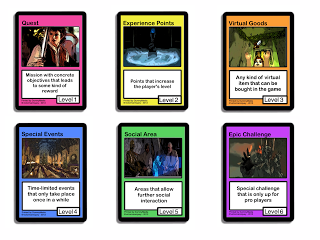
So many games have quests or missions that guide us and mostly everyone knows what a quest is. The main thing about them is that they are fun to do, and require many actions, movements and time to be completed. On the other hand, and speaking of gamification, quests are a way designers have to turn dull tasks into fun missions. These actions are not fun by themselves but we make them fun using gamification mechanics, which is quite different.
Gamification and Games: Similar, yet different
This topic will for sure need more research and community feedback, but for now, let's put some final words to it in order to make this clearer and easier to understand:
- Games are inherently fun, but in gamification we make (or try to) things fun
- Games have spaces, actions, movements and verbs. In gamification, those actions are tasks, duties, or work, and those things are given to us in the very beginning
- Game mechanics cannot be directly applied to gamification because they are similar yet different. They need to be revamped to match gamification special conditions
Any feedback, constructive critics, comments or questions are always welcomed! If you are interested in the materials I used for this blogpost, check this out, I basically analysed (again) 5-6 of them, plus many great game design articles and game designers points of view!
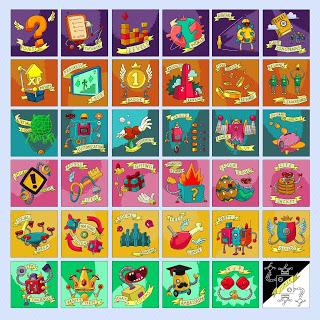
Just as a side note, I have my own special gamification mechanics that you can download for free here.
Sidney Lopez
2013